|
 |
 |
 |
 |
 |
 |
 |
 |
 |
 |
 |
 |
 |
 |
 |
 |
 |
 |
 |
 |
 |
 |
 |
 |
 |
 |
 |
 |
|
|
|
|
|
|
|
|
|
|
|
|
|
|
|
|
|
|
|
|
|
|
|
|
|
|
|
|
|
|
|
|
|
|
|
Pulling Rod Engine PATTAKON GREECE
|
|
|
|
|
|
|
|
|
 |
|
|
|
|
|
|
 |
|
|
|
|
|
|
|
|
The Basic Idea. Click on the image. Animation 420 KB.
|
|
|
|
|
|
 |
|
|
|
|
|
|
 |
|
 |
|
|
|
|
|
|
|
|
|
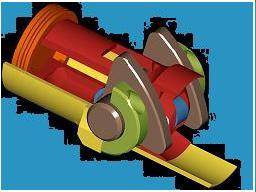
PRE single, at operation Animation 560 KB
|
|
|
|
|
|
|
|
|
|
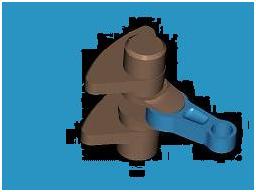
PRE, assembly / details Animation 520 KB
|
|
|
|
|
|
|
|
|
|
 |
|
 |
|
|
|
|
|
|
|
|
|
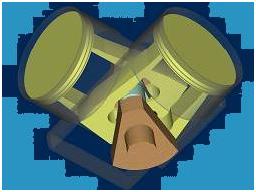
PRE V90 module, short stroke Animation 520 KB
|
|
|
|
|
|
|
|
|
|
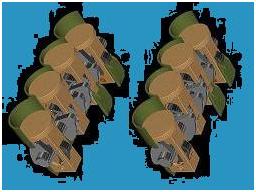
PRE Straight Four, stereoscopic Animation 412 KB
|
|
|
|
|
|
|
|
|
|
 |
|
 |
|
|
|
|
|
|
|
|
|
Details of Straight Four Image 60 KB
|
|
|
|
|
|
|
|
|
|
The principle Animation 380 KB
|
|
|
|
|
|
|
|
|
|
 |
|
|
|
|
 |
|
|
|
|
|
|
|
|
|
|
|
|
Junkers-PRE blueprint PDF 120 KB
|
|
|
|
|
|
|
|
|
|
Junkers - PRE Animation 1.2 MB
|
|
|
|
|
|
|
|
|
|
|
|
 |
|
|
|
|
|
 |
|
|
|
|
|
|
|
|
|
|
|
|
|
|
|
|
Junkers-PRE section ".exe" animation 900 KB
|
|
|
|
|
|
|
|
|
|
 |
|
|
|
|
|
|
|
|
Piston travel versus crank angle for Conventional, Harmonic and PRE 20 KB plot (click on image)
|
|
|
|
|
|
|
|
|
|
|
|
|
 |
|
|
|
|
|
|
|
|
Piston travel versus crank angle around TDC for Conventional, Harmonic, PRE and slower revving conventional 20 KB plot (click on image)
|
|
|
|
|
|
|
|
|
|
|
|
|
 |
|
|
|
|
|
|
|
|
Piston travel versus crank angle around BDC for Conventional, Harmonic, PRE and faster revving conventional 20 KB plot (click on image)
|
|
|
|
|
|
|
|
|
|
|
|
|
 |
|
|
|
|
|
|
|
|
|
Bourke Engine (Animation 400 KB)
|
|
|
|
|
|
|
|
|
|
 |
 |
|
|
|
|
Here is the famous Bourke engine (of Russell Bourke)
The Scotch Yoke mechanism provides a harmonic, or pure sinusoidal, piston motion. The scotch yoke was (and still is) the weak point of this design. The longer dwell of the piston near TDC is the strong point for the Bourke engine: the fuel or mixture finds better conditions into the combustion chamber, during combustion. Bourke engine can operate with high compression, lean mixture and self ignition (based on the active radicals from the previous cycle). A technology lately re-invented, HCCI .
Compared to the Bourke engine, the Pattakon PRE engine provides even longer dwell near TDC. Roughly speaking: if Bourke's engine increases, compared to conventional, the dwell of the piston near TDC for x%, the Pattakon PRE engine increases, also compared to conventional, the dwell of the piston near TDC for 2*x% (i.e. twice as much as Bourke engine does). See the relevant plot at Pre-TDC (the green curve or Harmonic stands for Bourke's piston motion profile).
Pattakon PRE engine uses the conventional crank-rod-piston mechanism. The 30 to 40% of additional time near TDC makes the Pattakon PRE engine capable to operate efficiently as compression ignition (Diesel) in some 30 to 40% higher revs than conventional Diesel engines (look at the Droplet animation). This way the naturally aspirated PRE Diesel competes the power concentration of the naturally aspirated spark ignition engine.
In the Junkers-PRE arrangement the engine uses two short stroke pistons to form a long stroke combustion cylinder. For instance, a piston stroke of 50 mm gives a 50+50=100mm deep cylinder. Respectively, the mean piston speed of the 100mm piston stroke conventional is twice the mean piston speed of the Junkers. The same is the fact for the piston acceleration. In tanker engines (like Sulzer, Mitsubishi etc) the mean piston speed defines the reliability and efficiency point (for similar cylinders and same revs, Junkers-PRE operates at half the mean piston speed). For the same "piston stroke" Bourke engine and Junkers-PRE have similar overall length (to compare the two arrangements open the PRE14.exe and Bourke.exe animations on the top and the bottom of the screen). During combustion, the surface of the walls around the combustion chamber is twice as much in the case of Bourke engine compared to the Junkers-PRE (the two cylinder heads of Bourke have been eliminated). The lubrication of the Junkers-PRE is, in fact, a four stroke lubrication (the oil rings of the pistons never pass over the ports). Wankel engine cannot help consuming oil, Junkers-PRE consumes no more oil than the state-of-the-art four stroke. The presence of two crankshafts initially appears as a disadvantage. It is not. A new level of balance for the internal combustion engine is achievable. The two opposite pistons absolutely balance each other. In case of equally distributed load on both crankshafts, the Junkers-PRE transfers neither inertia nor combustion vibrations to the basis. For instance, a Junkers-PRE having an electric generator on each crankshaft is an absolutely balanced power plant, in terms of inertia and combustion vibrations to the basis (ideal for Hybrid cars, autonomous robots etc).
|
|
|
|
|
 |
 |
|
|
|
|
|
|
|
|
|
|
|
|
 |
|
|
|
 |
|
|
|
|
|
|
|
|
|
|
|
|
Long stroke PRE Stroke=1.2*Bore
Stereoscopic Animation 820 KB
|
|
|
|
|
|
|
|
|
|
|
|
|
 |
|
|
|
|
|
|
|
|
Absolutely vibration free (better than Wankel) electric power generator, for Hybrid cars, Robots etc.
Top fuel economy, top power concentration and environment friendly.
Animation 680 KB
|
|
|
|
|
|
|
|
|
|
|
|
|
 |
|
|
|
|
|
 |
 |
|
|
|
|
PRE Hybrid car
Employing conventional / tested technology: electromotors like Prius, battery like Prius, electric generators like Prius, eliminating: transmission, differential(s), epicyclical power distribution, and taking advantage of the: compact, lightweight, vibration free, top thermal efficiency Junkers-PRE engine, the result may prove a step forward.
|
|
|
|
|
 |
 |
|
|
|
|
|
|
 |
 |
|
|
|
|
Pulling Rod Engine, in brief
By rotating for half a turn, about the wrist pin, the piston of the conventional engine, the Pulling Rod Engine ( PRE ) results. That simple . . .
As shown in the table below, the constant volume portion of the combustion in PRE engine can be increased a lot compared to the Conventional engine. The Diesel and natural gas are not the only engines that lack time. All engines do lack time at high revs, whatever high revs means for each one of them.
Despite the longer piston, the overall height of the engine is smaller and the crankshaft ( running through the piston ) is now closer to the camshafts.
Click on an image to download the respective "*.exe" animation or click on the "GIF anim" button to download the same "*.gif" animation
|
|
|
|
|
 |
 |
|
|
|
|
|
|
 |
|
|
|
|
|
|