Pat-Head Variable Compression Ratio ( Pat-Head VCR )
Intellectual Property: patent GB 2,468,763
patent US 8,166,929
A simple, lightweight and compact, yet robust and fully functional, Variable Compression Ratio mechanism for internal combustion engines.
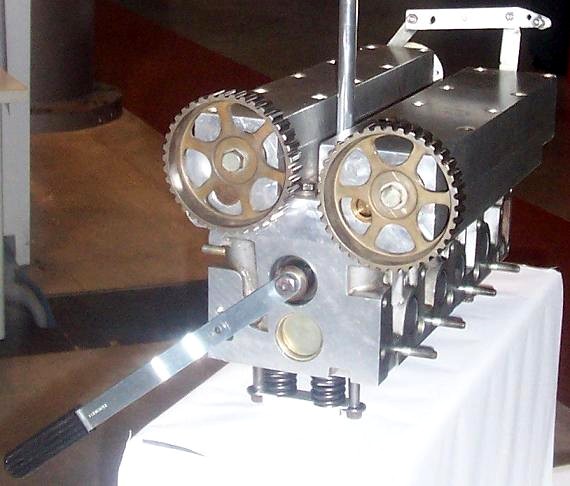
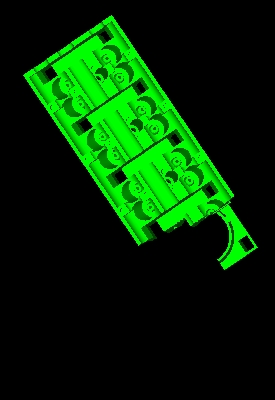
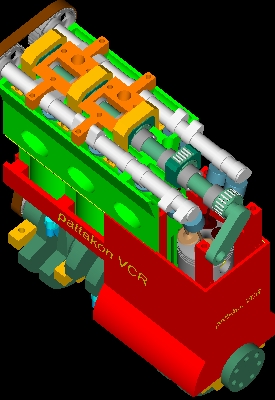
A continuously-Variable-Compression-Ratio mechanism (pat-head VCR, compression ratio from 7:1 to 20:1)
together with a continuously-variable-valve-lift mechanism (VVA-rod-version, valve lift from 0mm to 10+mm)
into a "Renault-1.4-Energy" cylinder-head, as exhibited at EngineExpo2009, Stuttgart, Germany.
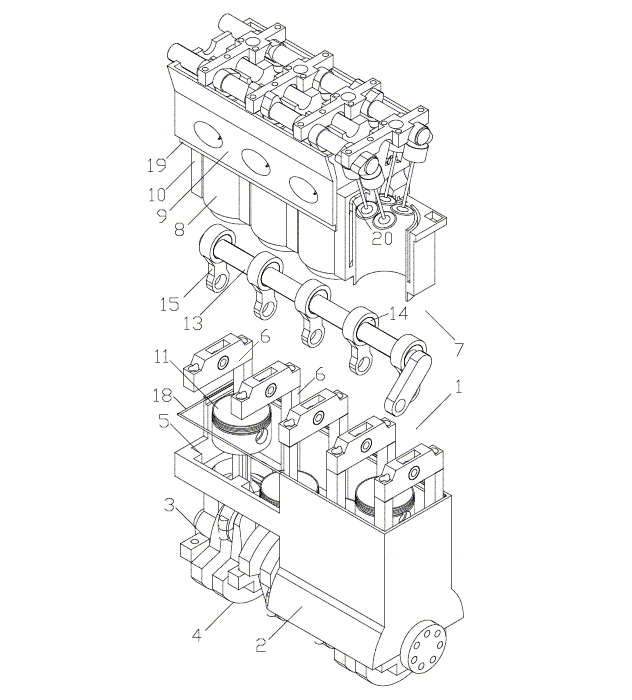
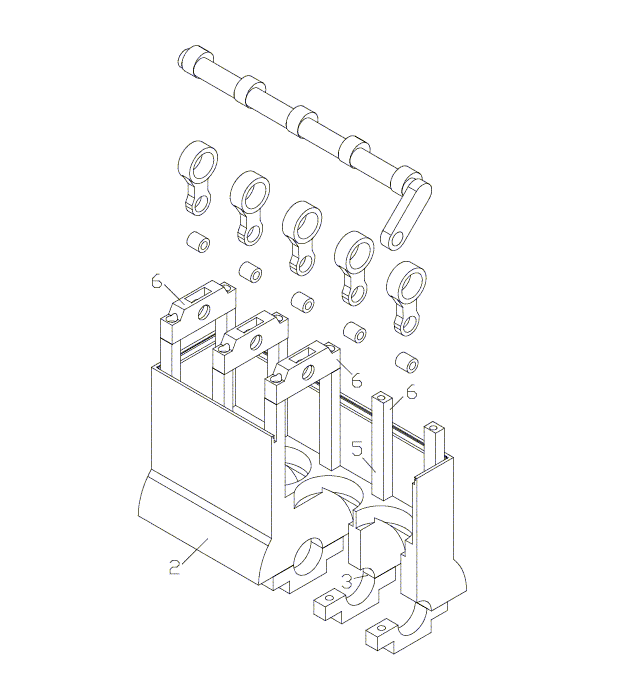
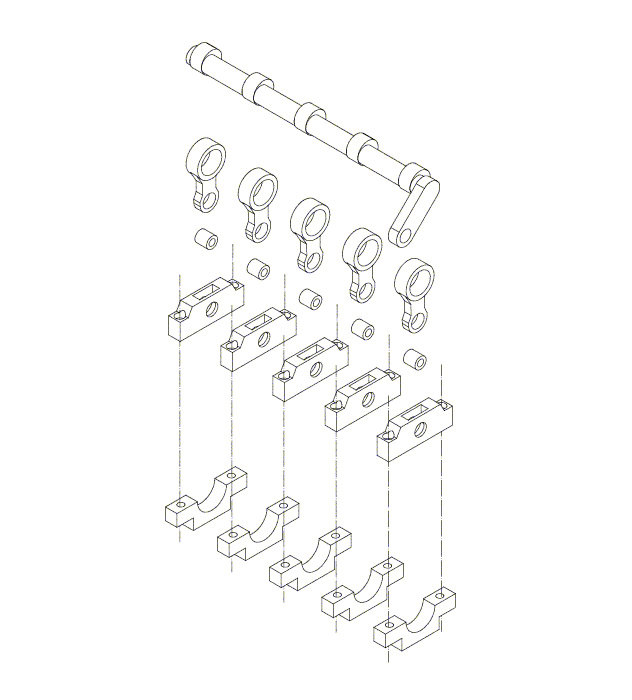
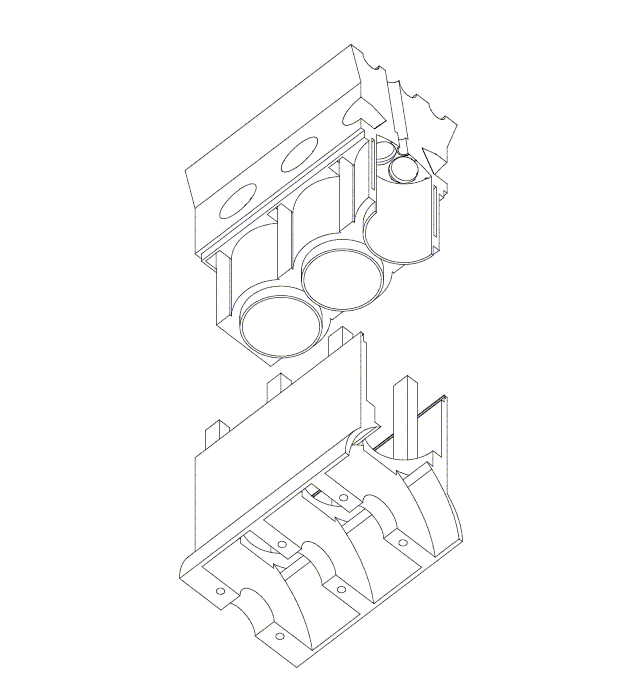
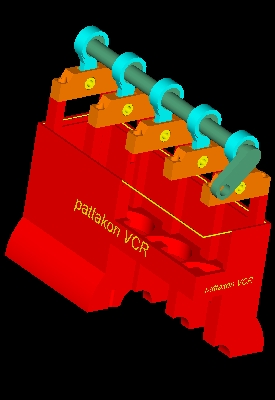
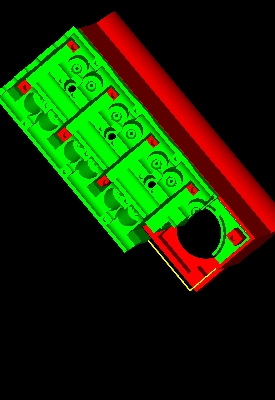
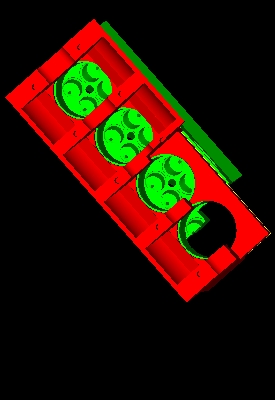
The crankcase (2) has projections (6) comprising pillars and bridges:
The pillars enter, through proper openings, into the cylinder head.
The bridges couple the free ends of the pillars to strengthen the structure and to provide supports to a
control shaft:
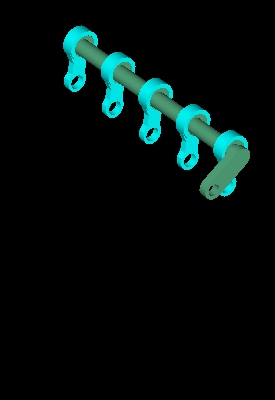
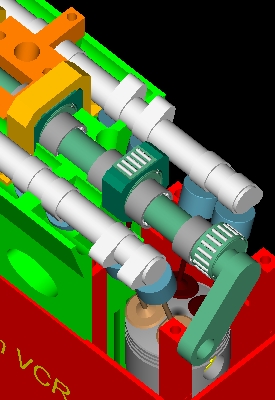
The control shaft (13) is pivotally mounted on the cylinder head above the combustion chambers
and, by 'small connecting rods' (15), it is supported on the bridges.
The narrowing between neighboring cylinders, typical in conventional cylinder
blocks, is an available free area for the pillars to pass and an available free surface for sliders (10).
The pillars connect, as directly as desirable, the tightening screws of the crankshaft bearing caps (3)
to the tightening screws of the bridges:
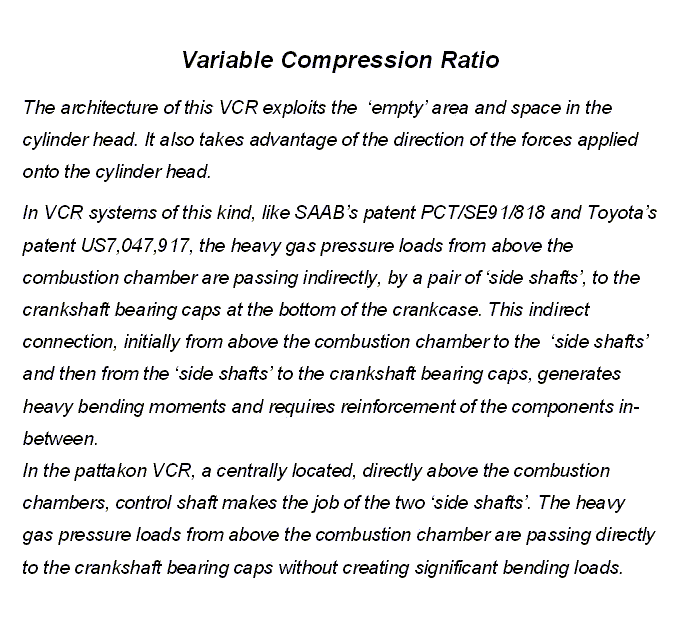
The gas pressure force on the piston (11) causes a heavy 'column load' on the connecting rod. The equal and opposite gas
pressure force on the cylinder head passes initially to the control shaft (13), then it is shared between
the two neighboring 'small connecting rods' (15) causing pure 'tension loading', then it is shared among the four neighboring pillars
causing pure 'tension loading' too.
The thrust force from the pistons onto the cylinder wall, several times weaker than the gas pressure force onto the piston,
passes to the crankcase through sliders (10) / (5) at the lower, well supported, side of the pillars.
As for the bridges, their bending loads are no heavier than those in the crankshaft bearing caps.
Keeping the rest architecture, scotch-yokes can replace the 'small connecting rods'.
If desirable, needle roller bearings can be used in all joints to bypass lubrication issues, if any.
The crankcase projections neither restrict the size of the intake and exhaust ports, as compared to the conventional
engine, nor restrict the coolant passage areas along the cylinder head.
The spark remains at the center of the combustion chamber.
The synchronization between crankshaft and camshafts is simple and accurate, as explained in the
Key Advantages.
The cylinder block is free from transferring the forces of the cylinder head to the crankcase. This allows a more reliable
sealing of the combustion chamber.
A promising further step is a single-piece "cylinder block / cylinder head":
For the sealing between the crankcase and the cylinder block, an elastic 'O-ring' (18) into a groove of the crankcase,
around the periphery (19) of the cylinder head, is all it takes.
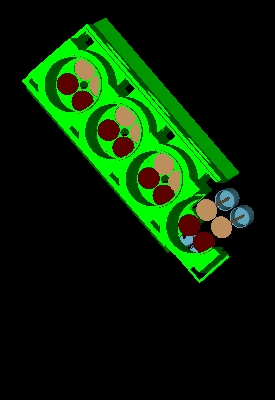
Besides the VCR control shaft, the cylinder head can also host a Variable Valve Actuation, or VVA,
system (like the DVVA, the
HyDesmo and the rest pattakon VVAs).
The light load operation (down-town traffic, for instance) fits the high compression ratios (VCR)
and the short valve lift / short valve duration / zero valve overlap (VVA). This combination protects
the valves from the piston and allows a well shaped combustion chamber.
The high turbulence and swirl (VVA) cause fast flame propagation that improves the thermal efficiency.
The reduced pumping loss (VVA) and the high compression ratio (VCR) also improve the thermal efficiency.
The thermal efficiency further improves by the shape of the combustion chamber (smooth piston
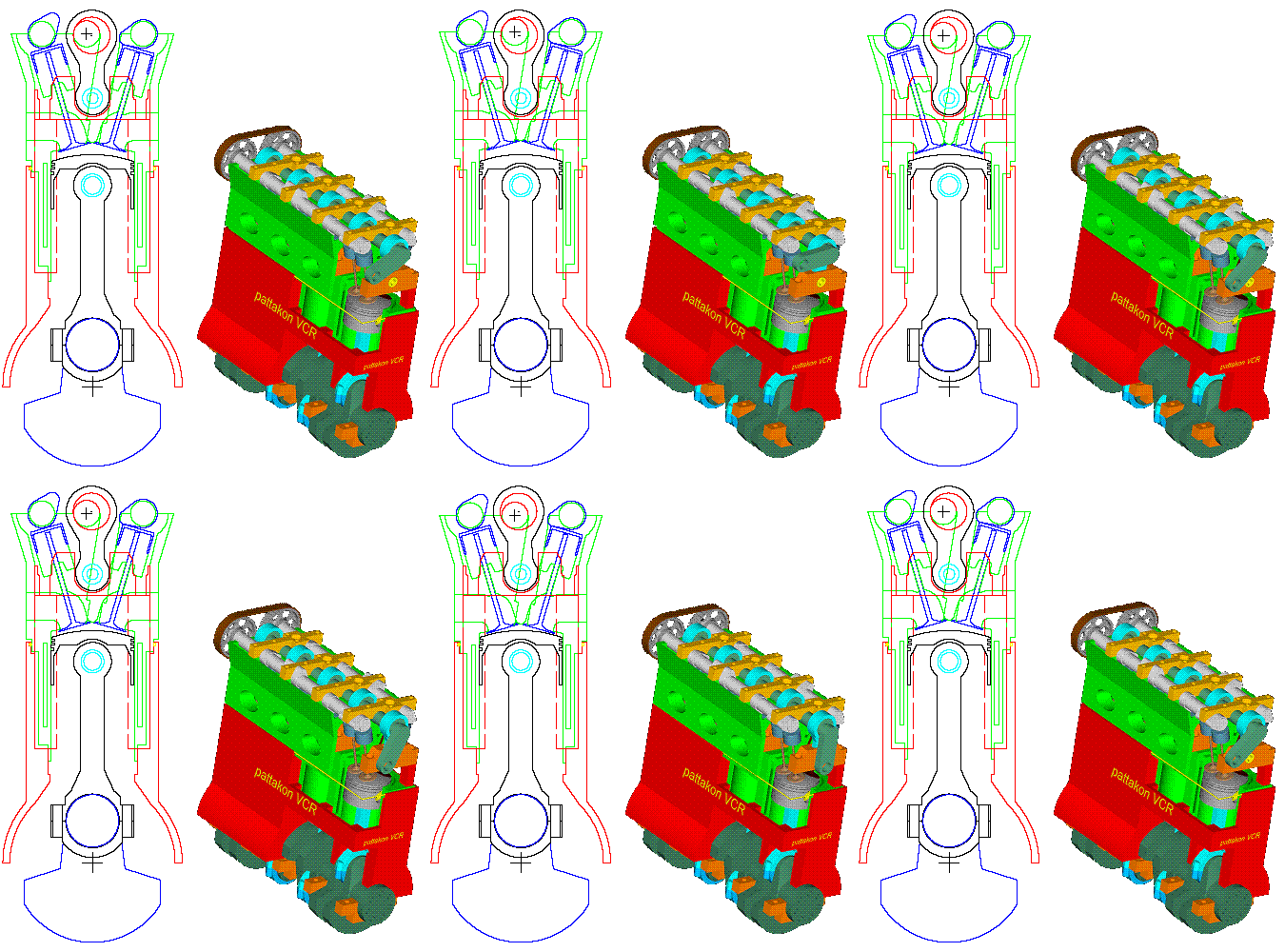
crowns without deep valve pockets, as in the animation above, reduced wall surface).
The heavy load operation, on the other hand, fits the medium-low compression ratios (VCR) and the long
valve lift / extensive overlap (VVA), allowing high or extreme specific power and downsizing.
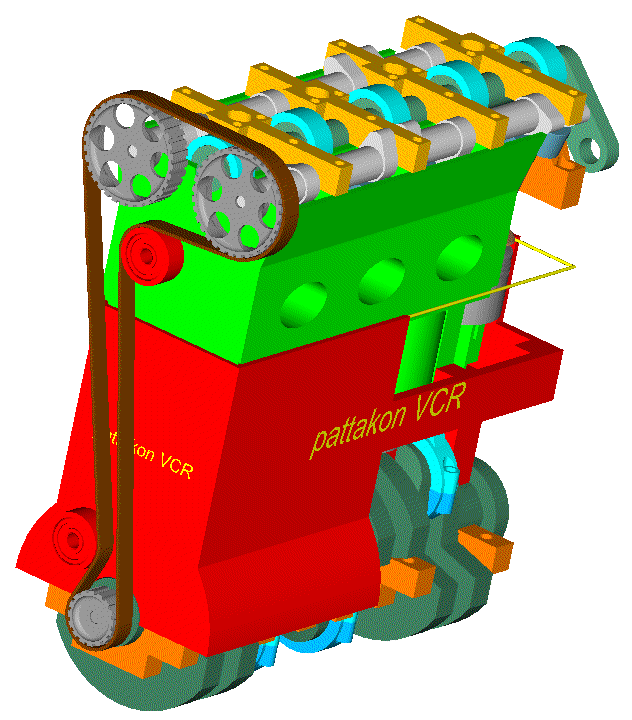
The synchronization between crankshaft and camshafts is simple and accurate:
A free roller (the red one, near the camshaft sprockets) has its center secured on the crankcase, i.e. its center remains immovable when the cylinder head moves up or down to change the compression ratio.
This free roller changes the direction of the belt / chain, coming from the crankshaft sprocket, for about 90 degrees before it meshes with the first camshaft sprocket.
Another free roller, beside the crankshaft sprocket, is the tensioner that takes the lash of the belt / chain (the conventional lash and the lash resulting from the approach of the camshafts to the crankshaft).
This simple geometry keeps the timing between crankshaft and camshaft unchanged, no matter what the compression ratio is, i.e. the valves open and close at the same crankshaft degrees either at 20:1, or at 7:1 or at any other available compression ratio.
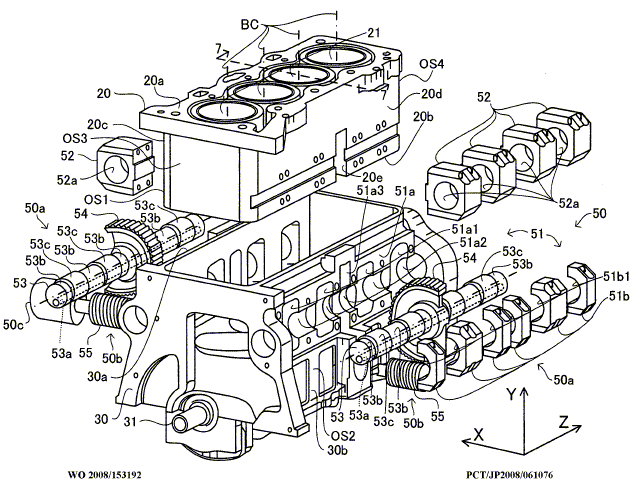
Below is a state-of-the-art "movable cylinder-head VCR" for comparison in functionality, side effects
(like bending loads), complexity, cost, compactness, weight, etc.
(click here for the international patent application of the above VCR).
A high "fixed" compression ratio (like 13:1 and 14:1) combined with a limited Miller cycle is now
in fashion (Toyota Prius, Mazda SkyActive, Nissan Micra DIG etc) for top fuel efficiency.
The PatHead-VCR combined with the PatAir VVA (or the
HyDesmo VVA) enable not only better fuel
efficiency ("optimized" high compression ratio combined with an unlimited Miller cycle), but also way higher power
density ("optimized" low-medium compression ratio combined with increased valve lift-duration-overlap), as well as instant digital microalignment of the actual compression ratio independently on each cylinder.
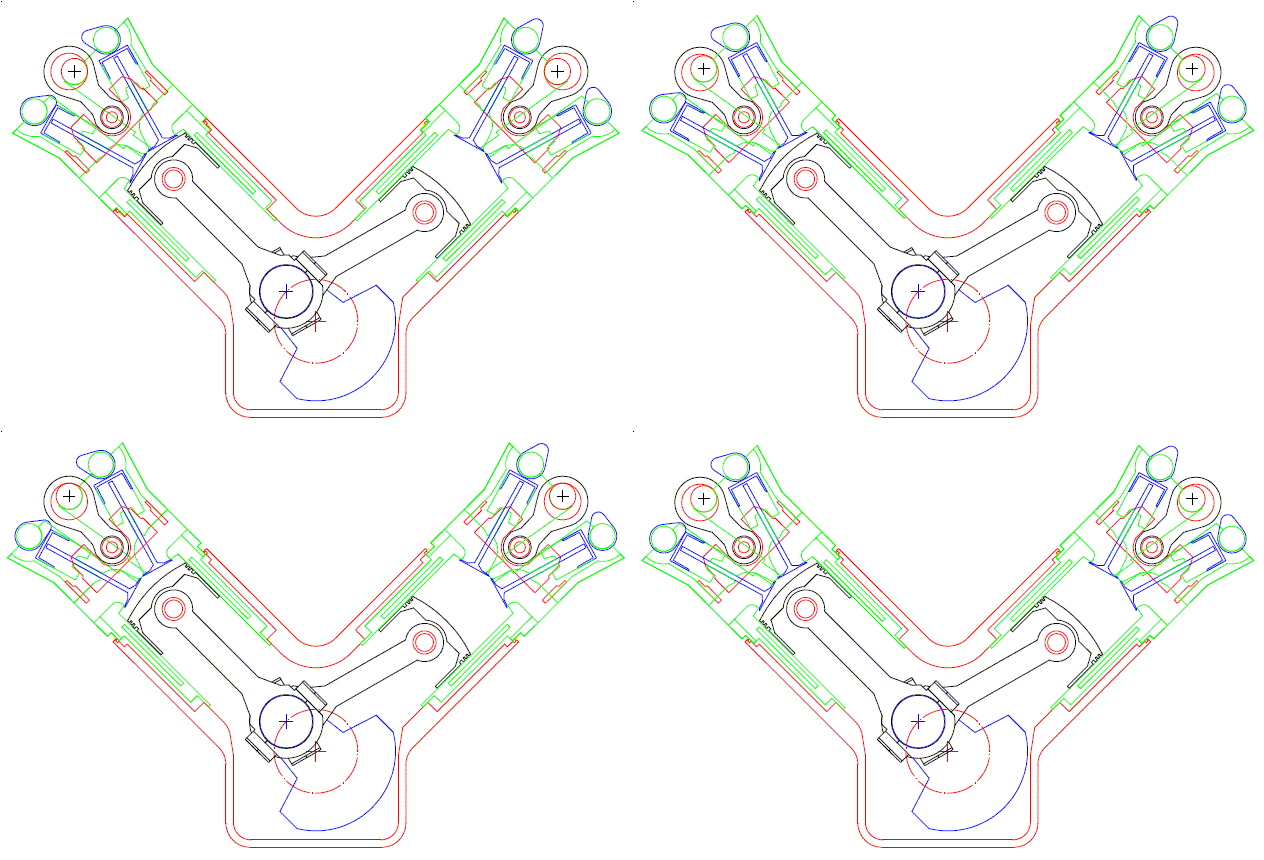
Pat-Head VCR in Vee engines:
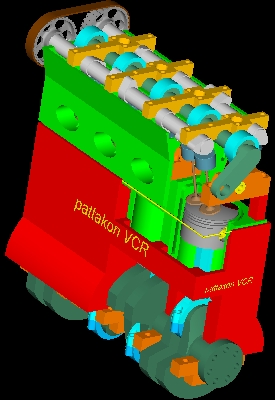
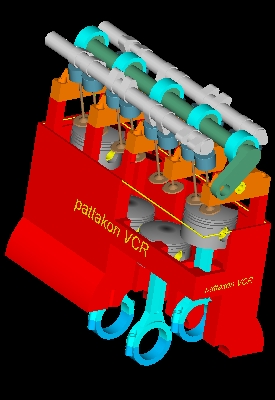
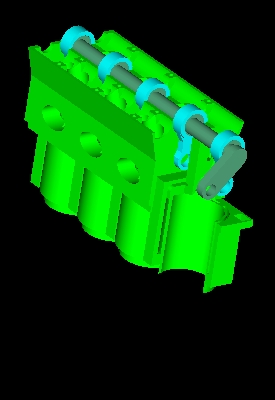
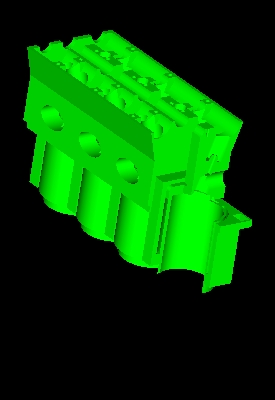
In the above animation the engine comprises a robust Vee-casing (red) wherein two independent cylinder blocks (green) are slidably mounted.
The angular displacements of the two control shafts (those between the camshafts) define the compression ratio of each block of cylinders.
If desirable, the one block of cylinders can run at different compression ratio than the other.
The geometry of the engine remains constant, no matter what the selected compression ratios are.
One only servo-motor can serve both control shafts.
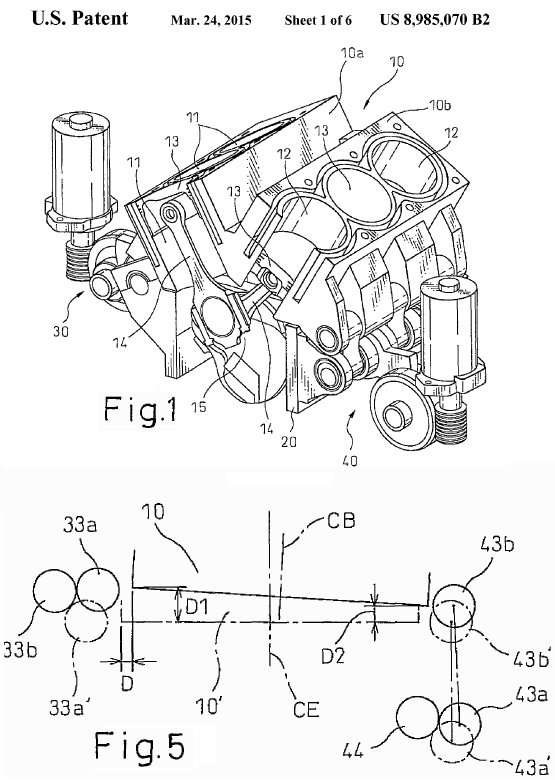
For comparison (in functionality, in side effects, in weight, in cost etc) here is Toyota's VCR for Vee engines (click here for the US patent granted to Toyota, March 2015):
By using both servo-motors, Toyota's VCR mechanism achieves the same compression ratio in both cylinder rows; but the geometry of the engine cannot remain constant (Fig 5 above) as the compression ratio varies.
The balancing of the engine varies with the compression ratio.
As the compression ratio increases, the offset of the one row of cylinders increases while the offset of the other row of cylinders decreases.
As in SAAB's VCR, the block of the cylinders of Toyota VCR needs to be substantially reinforced.
And as in SAAB's VCR, the support of Toyota's cylinder block on the crankcase is prone to oscillations (noise, vibrations etc).
Toyota's VCR for Vee engines does solve the problem of "variable compression in Vee-engines".
However, it introduces a series of serious side effects.