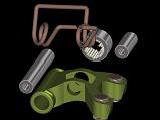
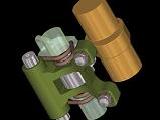
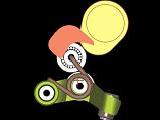
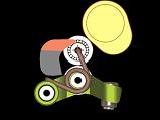
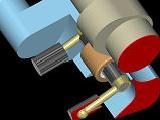
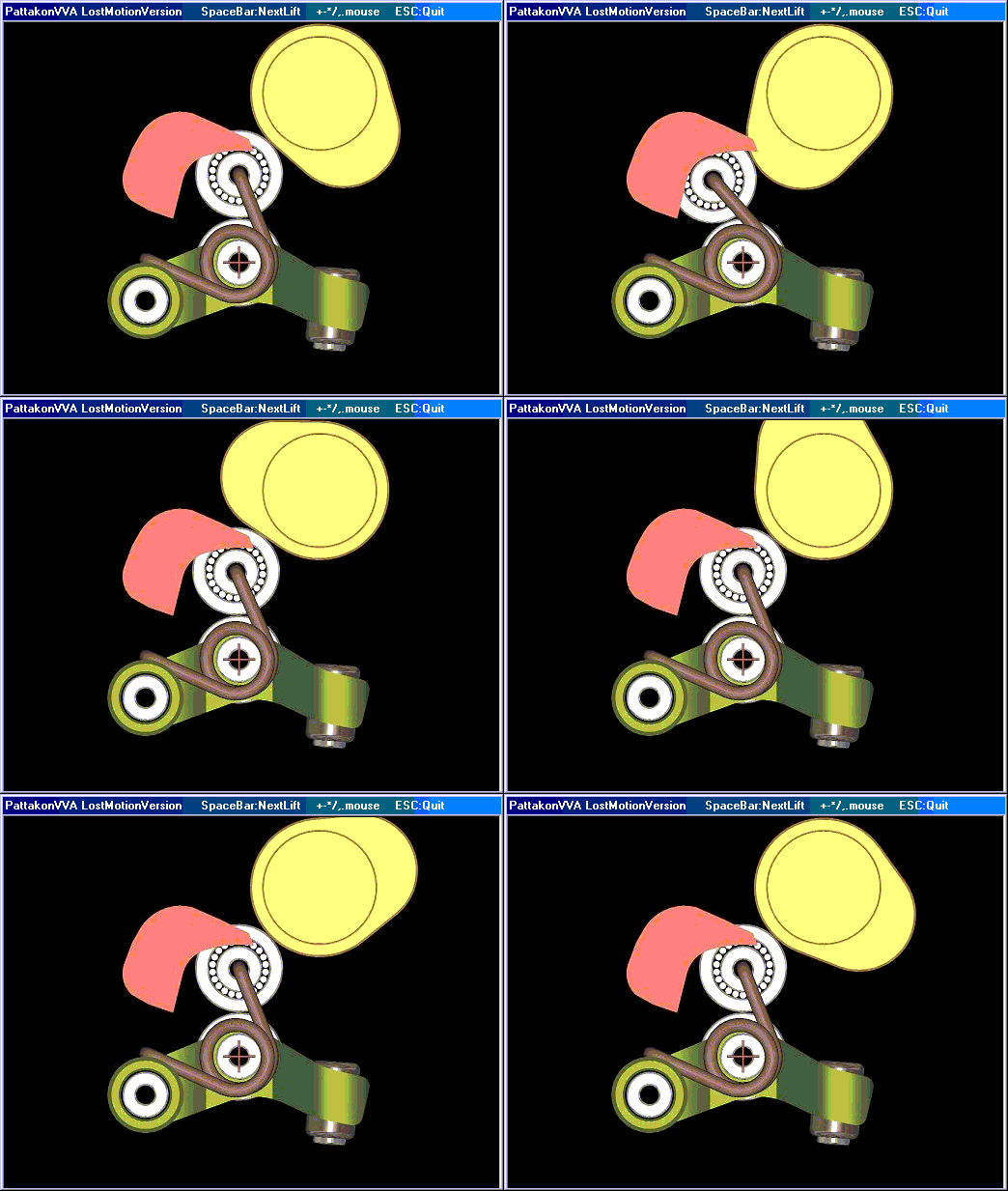
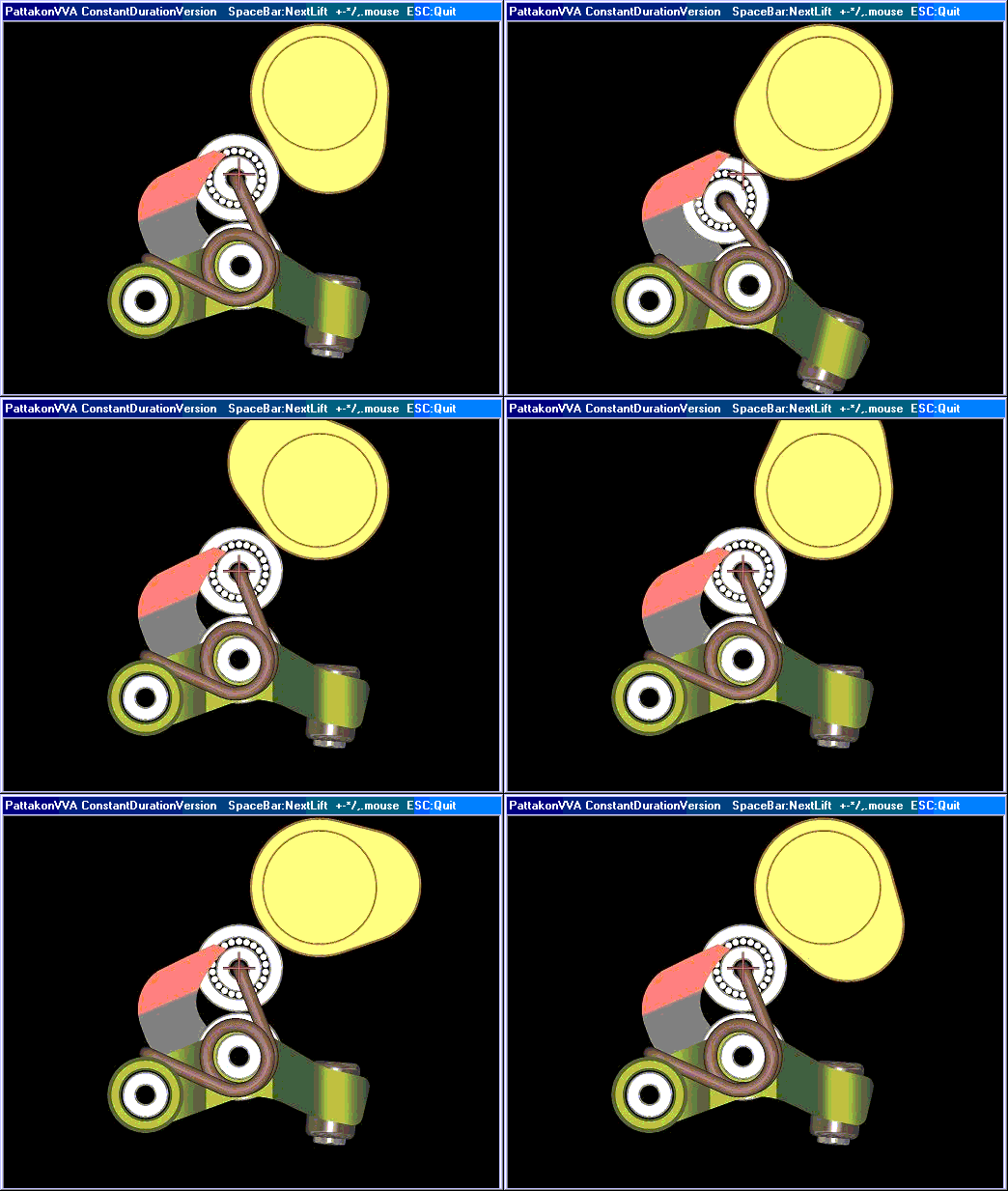
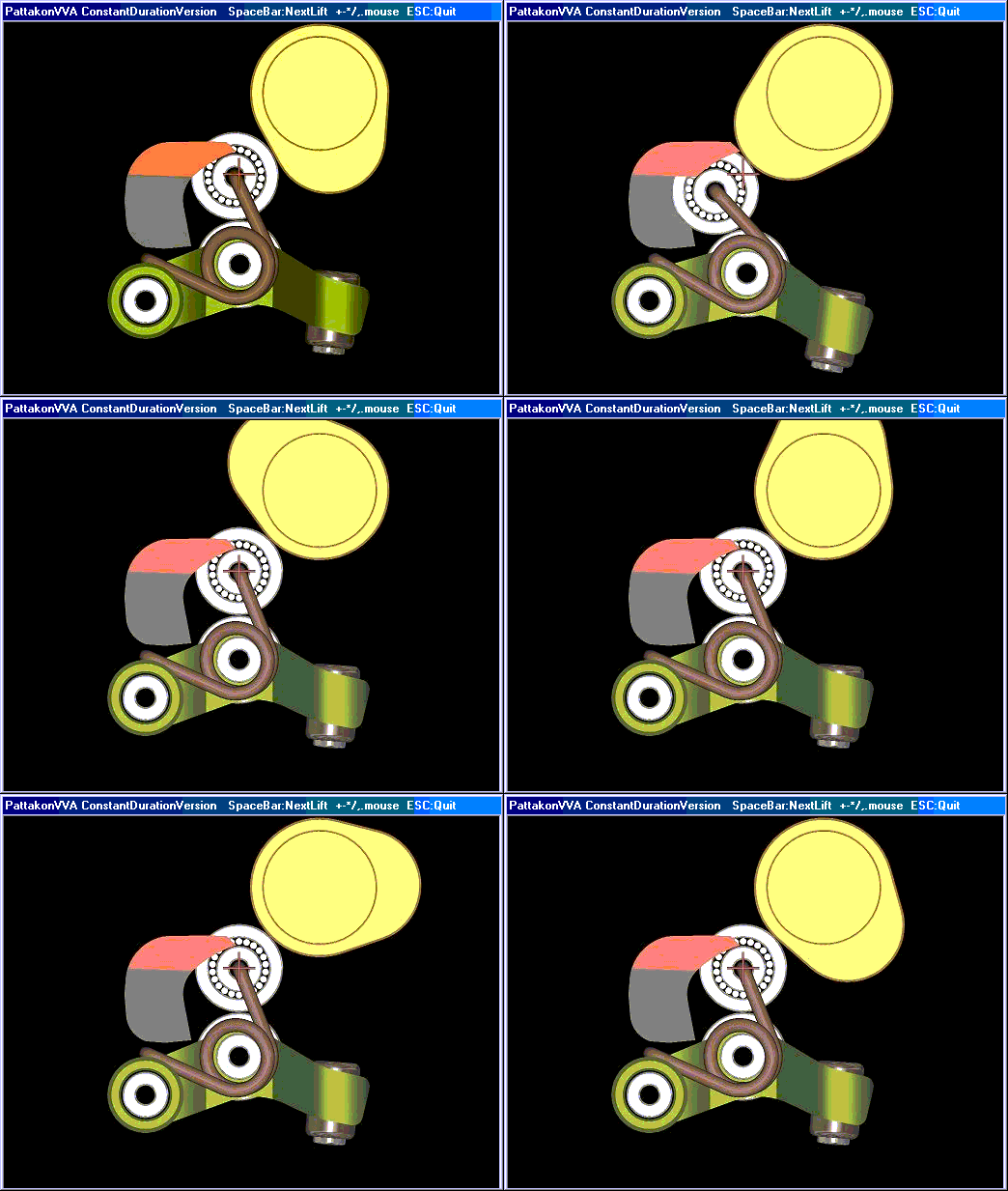
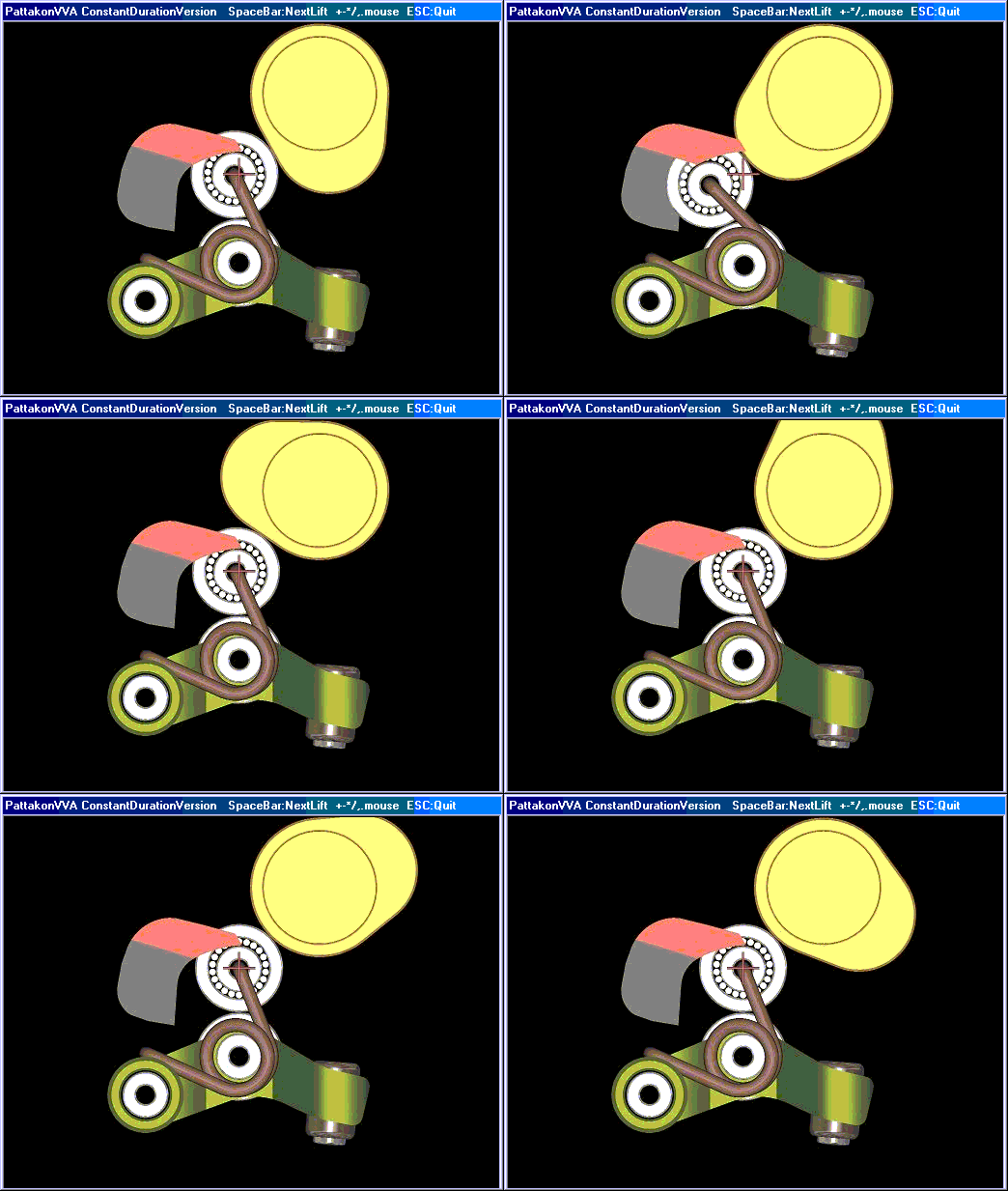
Click on an image to download the relevant animation or slide.
To compare the "Lost Motion" and the "No Lost Motion" VVA mechanisms, download
and run side by side both animations: the Lost Motion and the No Lost Motion.
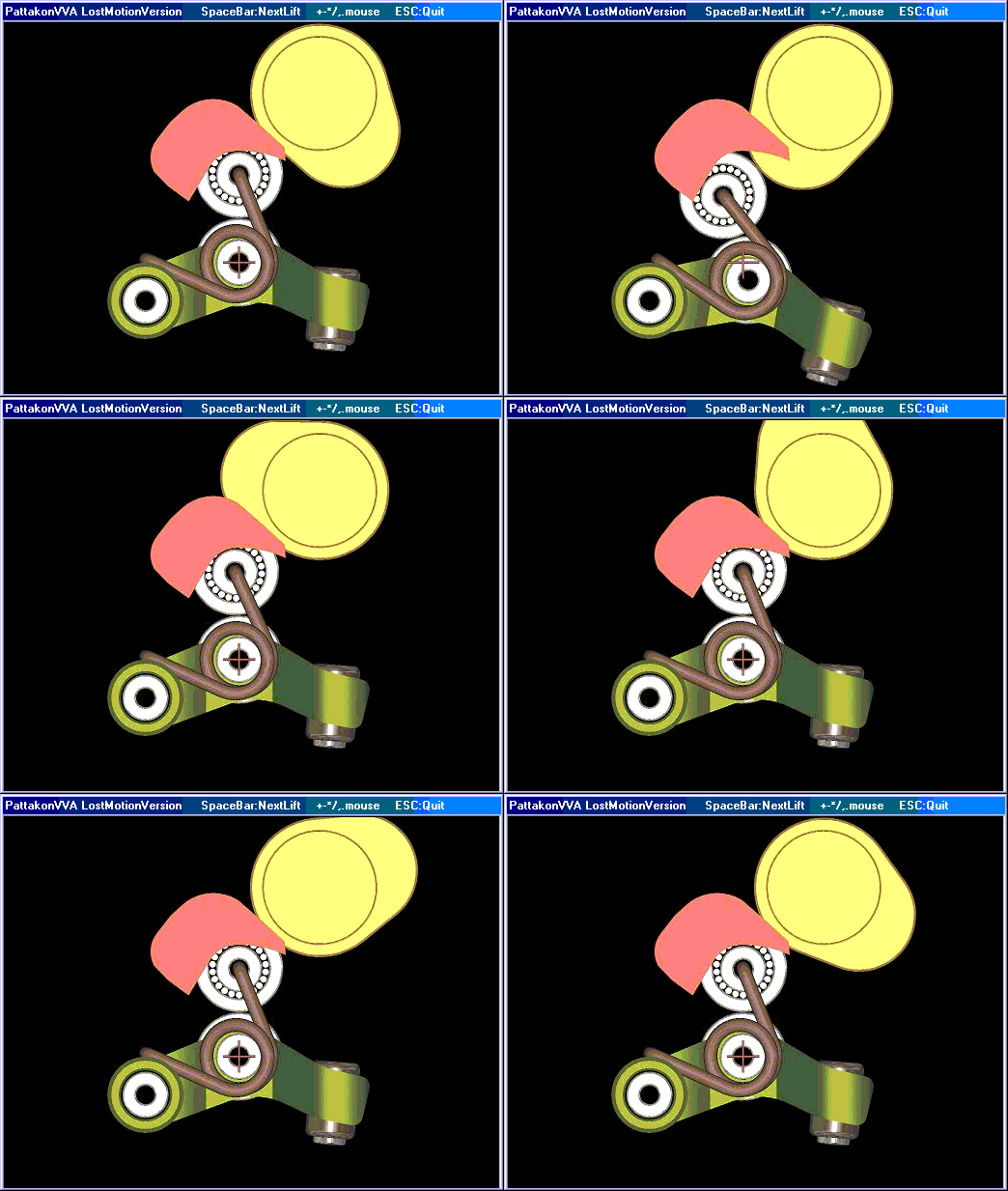
In the following three GIF animations it is shown the Lost Motion version in a high, a medium and a low lift:
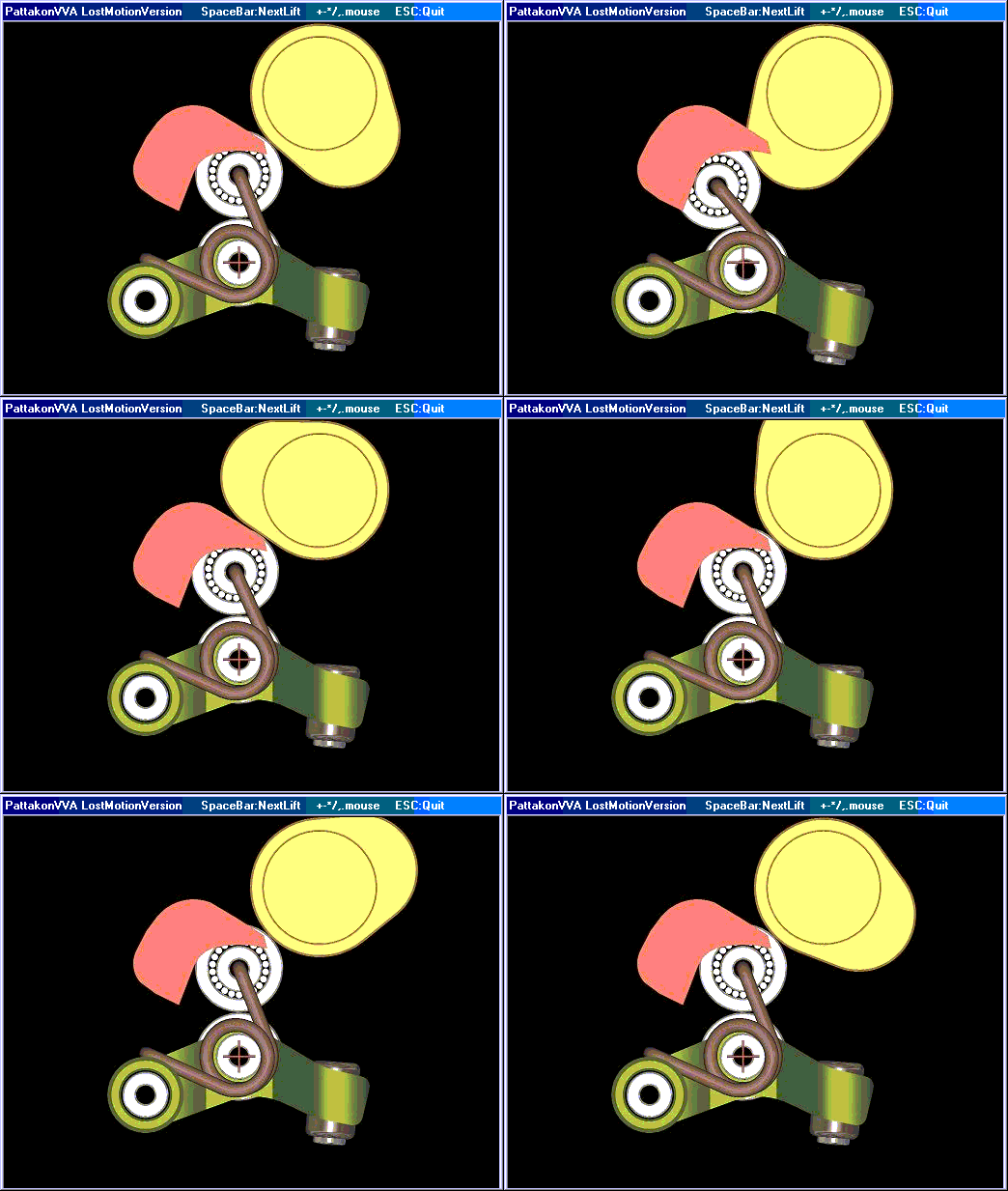
In the following three GIF animations it is shown the Constant Duration version in a high, a medium and a low lift:
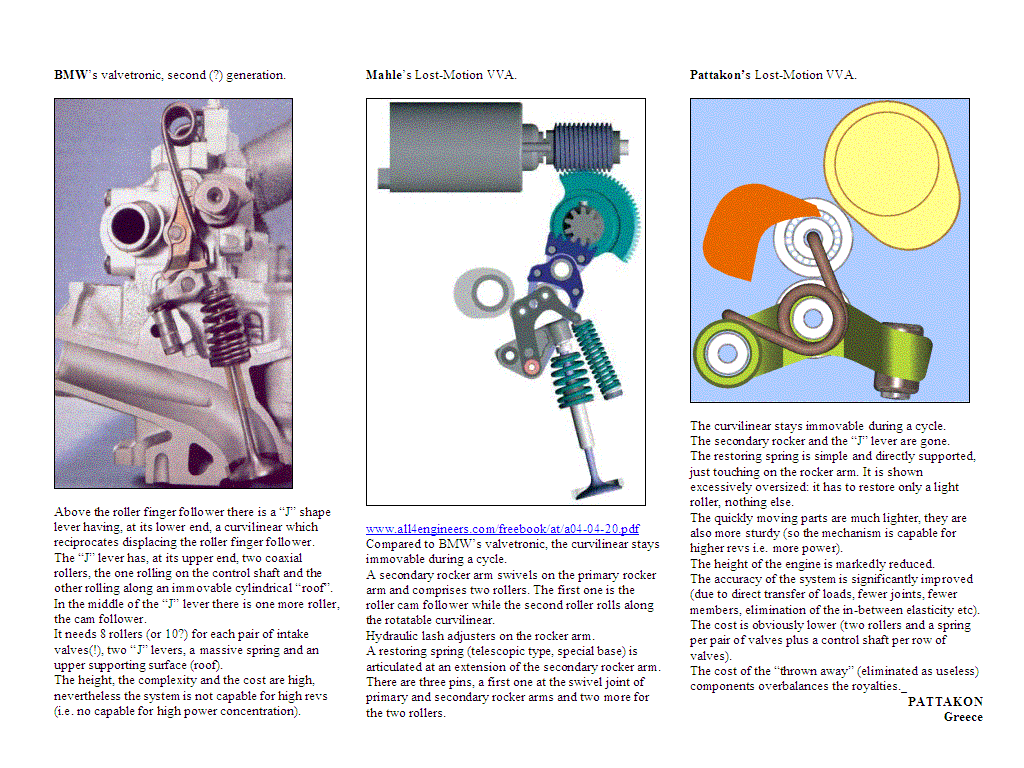
Besides the valve springs, a Lost Motion VVA needs strong restoring springs to
restore the parts of the mechanism. This is why BMW cannot avoids to use
valvetronic on its sport models.
Nissan uses a demi-"desmodromic" Lost Motion VVA that restores mechanically the parts of the
VVA mechanism (but not the valves themselves, which are restored by normal valve
springs) and increases somewhat the rev range.
The ultimate solution is the pattakon Desmodromic VVA (or DVVA). It is true
desmodromic (there are no valve springs neither other restoring springs) and
fully variable (operates either as a Lost Motion VVA or as a Constant Duration,
i.e. No Lost Motion VVA, or ...).
For more about pattakon DVVA: Desmodromic VVA